Of course, now I have to remember what was on the list.
September: ?????? I can't remember! September is forever ago!
October: Ghosts by Raina Telgemeier and Ghost by Jason Reynolds
November: The Seventh Wish by Kate Messner
December: Spontaneous by Aaron Starmer
January: The Memory of Light by Francisco X. Stork
February: Samurai Rising by Pamela S. Turner
March: The Girl Who Drank the Moon by Kelly Barnhill
April: The Lie Tree by Frances Hardinge
May: The Serpent King by Jeff Zentner
It's been a good year. I have to pat us on our collective book club back for getting The Girl Who Drank the Moon on our list long before it won the Newbery.
I also keep thinking about my Serpent King / Oedipus thoughts. Can Dill be Oedipus and Oedipus' children? Because then it works pretty well - Oedipus has that apotheosis at the end of Oedipus at Colonus, which would parallel Dill's leaving Forrestville behind, moving on to a higher plane of existence (so to speak). But generationally speaking, Dill's father would be Oedipus, which also makes sense. Oedipus saves the people of Thebes, Dill's father is a preacher who tries to save his congregation. Fate brings Oedipus down, but it uses sexual taboo (incest) to do so; same with Dill's father (in his case, pedophilia); you could also say that hubris played a big part in taking them both down, obviously.
We're meeting on Wednesday to talk about The Serpent King. As I mentioned, our conversations never go very deep - we tend to stick to classroom applications of the books - but this Oedipus thing may be something I have to bring up.
Monday, May 22, 2017

Sunday, May 21, 2017
Has it only been a day?
I'm trying to rediscover my purpose for this blog. It wasn't actually to review books. It was to have a place to spill all of my immediate reactions and thoughts about what I was reading, as if this blog were the fellow reader I never have, a reader who was reading the same books at the same pace and who would know what I was talking about when I said it.
So I'm going to try to get back to that. It was easy and fun to write that blog.
Over the last couple of days, I took a break from Jonathan Strange & Mr. Norrell (which I am reading as part of the project I mentioned yesterday, which I am once again punting down the road) to rip through The Serpent King by Jeff Zentner. It's the final book for my teacher book club and a brilliant way to close out a year of really awesome books (list below, if I can remember it).
Number one, I think I'd like to just hang out with Jeff Zentner and talk books and music. The Secret History is name-checked in the first few pages of The Serpent King. And then a bunch of other books and bands that I love. I won't list them - just read the book. I wrote years ago about music in books and every time I read a book that's heavy on dropping names of musicians (it happens a lot in YA) or movies or books I think kind of similar thoughts. First, it usually comes off as trying to hard to prove the cred of your characters, and your own by extension (I think Zentner escapes this, but not by a lot). Second, I prefer less explanation to more explanation (this Zentner does really well). I want the music referenced to make me curious enough to look it up. Finally...well, a new paragraph for this finally.
In The Serpent King, Zentner mixes up some fictional artists with his real artists, both musicians and authors. I'm never sure how to feel about that. So, like, Lydia listens to lots of great real music, but when she interviews a pop star for her blog, it's the fictional Laydee (terrible name, BTW). And Travis is obsessed with an obvious George R.R. Martin ripoff* - so obvious that I found it a little distracting. Why not just have it be the man himself? Or, flipside, why not make up all fictional celebrities (Daniel Handler is great at this - I'm still crushed that Hawk Davies doesn't exist)?
Fictional books and music aside, mostly when my thoughts drifted from The Serpent King, they drifted to Greek mythology and politics (as my thoughts so often do since November - it's amazing how politically charged even innocuous things are now).
First, myths. The Serpent King as a name seems like it's straight out of ancient lore, and clearly the story of Dill's grandfather has a place in his town's mythology. But I was mostly thinking about Oedipus and everything the Oedipal trilogy has to say about fate. That it's inescapable. That the sins of the father will be visited on his children, whether or not they've done anything to deserve it. (I was trying to remember if there were snakes in the Oedipus story - aside from the snakes that played a part in Tiresias' blindness, I don't think so?)
Of course, we aren't quite as bound to the idea of fate as the Greeks. Probably a good thing.
So, politics. Or religion. Politics and religion? They seem inextricably linked for so many people and I myself can't separate fundamentalist Christianity from conservatism. Dill's parents trying to convince him that education wasn't necessary because he had religion? Ugh. That seems to be the thing Trump and his ilk want the unwashed masses to believe. They don't want the lower classes to strive, to dream of more. They want them to be satisfied with as little as possible, misled by the belief that to want more is to be prideful, something to avoid, and that their reward for that miserable, humble life is in heaven. My favorite thing about this book is that it shows just how toxic those beliefs are.
*By the by, this is the second YA book I've read in the last year with a fictional take on George R.R. Martin and Game of Thrones. The other was Morgan Matson's The Unexpected Everything, which I unexpectedly enjoyed, although the fantasy novel excerpts were one of the things I liked least about it.
So I'm going to try to get back to that. It was easy and fun to write that blog.
Over the last couple of days, I took a break from Jonathan Strange & Mr. Norrell (which I am reading as part of the project I mentioned yesterday, which I am once again punting down the road) to rip through The Serpent King by Jeff Zentner. It's the final book for my teacher book club and a brilliant way to close out a year of really awesome books (list below, if I can remember it).
Number one, I think I'd like to just hang out with Jeff Zentner and talk books and music. The Secret History is name-checked in the first few pages of The Serpent King. And then a bunch of other books and bands that I love. I won't list them - just read the book. I wrote years ago about music in books and every time I read a book that's heavy on dropping names of musicians (it happens a lot in YA) or movies or books I think kind of similar thoughts. First, it usually comes off as trying to hard to prove the cred of your characters, and your own by extension (I think Zentner escapes this, but not by a lot). Second, I prefer less explanation to more explanation (this Zentner does really well). I want the music referenced to make me curious enough to look it up. Finally...well, a new paragraph for this finally.
In The Serpent King, Zentner mixes up some fictional artists with his real artists, both musicians and authors. I'm never sure how to feel about that. So, like, Lydia listens to lots of great real music, but when she interviews a pop star for her blog, it's the fictional Laydee (terrible name, BTW). And Travis is obsessed with an obvious George R.R. Martin ripoff* - so obvious that I found it a little distracting. Why not just have it be the man himself? Or, flipside, why not make up all fictional celebrities (Daniel Handler is great at this - I'm still crushed that Hawk Davies doesn't exist)?
Fictional books and music aside, mostly when my thoughts drifted from The Serpent King, they drifted to Greek mythology and politics (as my thoughts so often do since November - it's amazing how politically charged even innocuous things are now).
First, myths. The Serpent King as a name seems like it's straight out of ancient lore, and clearly the story of Dill's grandfather has a place in his town's mythology. But I was mostly thinking about Oedipus and everything the Oedipal trilogy has to say about fate. That it's inescapable. That the sins of the father will be visited on his children, whether or not they've done anything to deserve it. (I was trying to remember if there were snakes in the Oedipus story - aside from the snakes that played a part in Tiresias' blindness, I don't think so?)
Of course, we aren't quite as bound to the idea of fate as the Greeks. Probably a good thing.
So, politics. Or religion. Politics and religion? They seem inextricably linked for so many people and I myself can't separate fundamentalist Christianity from conservatism. Dill's parents trying to convince him that education wasn't necessary because he had religion? Ugh. That seems to be the thing Trump and his ilk want the unwashed masses to believe. They don't want the lower classes to strive, to dream of more. They want them to be satisfied with as little as possible, misled by the belief that to want more is to be prideful, something to avoid, and that their reward for that miserable, humble life is in heaven. My favorite thing about this book is that it shows just how toxic those beliefs are.
*By the by, this is the second YA book I've read in the last year with a fictional take on George R.R. Martin and Game of Thrones. The other was Morgan Matson's The Unexpected Everything, which I unexpectedly enjoyed, although the fantasy novel excerpts were one of the things I liked least about it.
Saturday, May 20, 2017
Slow reading
Apparently I started writing a post here when I was sick about a month and a half ago. I don't have any recollection of doing that. Since that time, I've been sick again and I have not read many books. Really, I haven't read many books since, like, October.
Let me interrupt myself here to acknowledge that my not-many-books is still quite a few books. I just haven't been reading at the breakneck pace of last summer (none of which was recorded here, so you'll just have to take my word for it).
I had been thinking for quite a long time that it was the election that knocked me off my reading pace (still a strange thing to say, but I willfully admit that I spend a lot more time since November 9 watching and/or reading the news and thus, a lot less time reading books), but looking back at my reading log (or Book of Books), it seems I lost some steam before that terrible night. I've had some spurts of renewed literary energy (especially over breaks from work), but I'm still not back to my old self, reading-wise.
Maybe I just needed a break.
That said, summer is fast approaching and I am finding myself increasingly excited about having lots of time to read. I have some good books lined up for summer book camp (and I may actually bring myself here to talk about them, because we never dig very deep at book camp - conversation tends to be limited to classroom applications), a few titles I bought over the year that are looking very tantalizing on my book shelf, and a reading project I started in January that should keep me busy well past this summer.
I'm going to hang on to that project for my next post (an optimistic pronouncement, given the likelihood of that post materializing in any kind of timely fashion, but whatever, I choose optimism).
Friday, July 17, 2015
3 girls, 3 makeshift families...3 more books
Last time, I talked about three "boy books" (I will reiterate, though, that I think Buddy will be a hit with dog-lovers of either gender); this time, we're looking at three "girl books", books that aren't just about three girls, but about three girls who find themselves without parents, facing the reality of some kind of foster care. Without further ado...


First up is Summer of the Wolves by Polly Carlson-Voiles. Briefly, Nika and her little brother Randall have been in a few foster homes following their mother's death (dad had been dead for a while); their latest is a good one, but their foster mother gets sick and needs to give up fostering for a while. Coincidentally, a long-lost uncle is discovered and agrees to host the kids for a few weeks in Minnesota. Uncle Ian studies wolves in the Boundary Waters and, the first day he takes Nika out with him, they find an orphaned wolf pup who they take home to raise. As the wolf, Khan, grows older, Nika grows more attached to this new home, at least until the inevitable misunderstanding and falling-out. Actually, I expected this book to be a lot more predictable; few of the beats fell where I expected them. Nika's relationships develop very naturally, which is to say, a lot of false starts and brief spats and very little reliance on the cliche of the steady build, big falling-out, and inevitable epiphany and reunion. There are some exciting scenes, but mostly it's a quiet, warm kind of book. Interestingly, this "girl book", like the two below, seem more gender neutral than the preceding "boy books"; that dynamic seems a bit backwards. The assumption seems to be that girls will read books about boys, but the reverse can't be true. But we'll see.
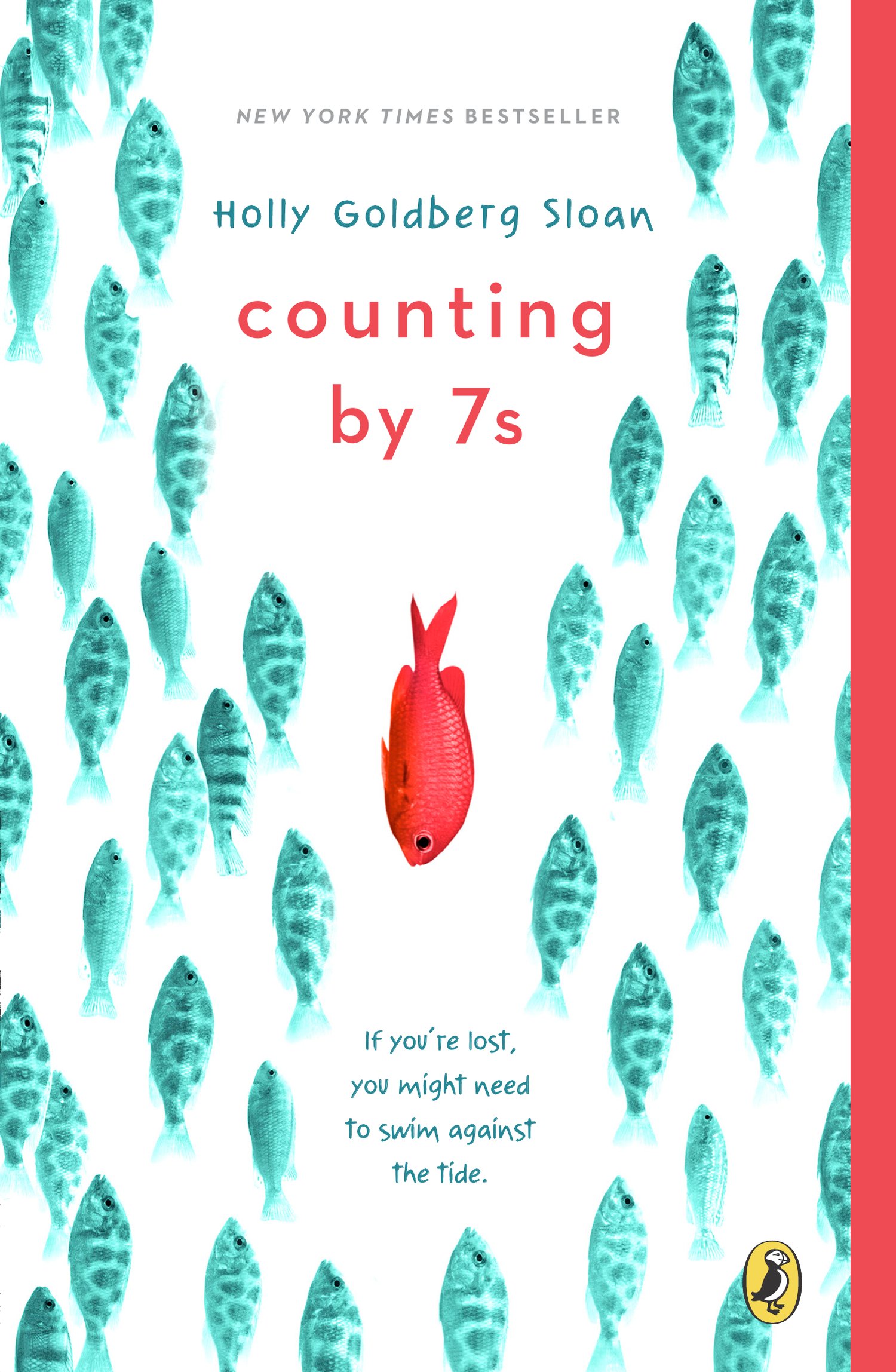
Next up, Counting by 7s by Holly Goldberg Sloan (another thing these books share - authors with three names!). This was the only book on the list I had already read, but I read it again. It also has the advantage going in of being a book that tons of kids have already read, although that didn't push The False Prince to a win, so it might not be as big an advantage as I'd have thought last year. I like a lot about this book, although I think the character of Dell Duke is a misstep - yet another incompetent, slobbish fatty. You can make a character fat and allow them to be happy. And not just happy, but smart and capable and successful! I swear! Anyway.
I just went and read The Book Smugglers' review of this book and found myself nodding along with their objections as well: Dell's bonkers counseling "strategies" that are portrayed as relatively harmless quirks, the fact that Pattie is sitting on a ton of money that she won't spend on her own kids (there's frugal living and then there's living illegally in a garage) but busts out for the very special (and don't you forget it) Willow, etc., etc.
But still, I enjoyed it! I like that Willow learns to be more of risk-taker and to embrace uncertainty. I like the diversity of the characters. I like the stuff about plants. It made me start thinking about places that could use a nice garden. I will recommend it to kids, although I suspect most of them won't need me to because they've already heard from teachers and friends that this is a book they should be reading.

Finally, One for the Murphys by Lynda Mullaly Hunt, which I finished last night. I did not mean to read to the end when I sat down with this book - I was only a couple chapters in, but I just couldn't find a good place to set it down and, before I knew it, the end was only a few chapters away and, well, here we are. It's weird and kind of great that there are so many books about foster care out there and on this list. And they're all pretty good!
I don't have quite enough distance from this to have thought of anything insightful to say, but I think it'll be a hit. Carley is a great character, very hard not to root for.
Sunday, July 5, 2015
3 more...
As much as I hate the idea of "girl books" and "boy books," the three Maud Hart Lovelace contenders I'm going to talk about here are definitely boy books. I don't think any of them pass the Bechdel test (neither did Fourmile or Zombie Baseball Beatdown, now that I think about it), which isn't the end of things, but worth noting, especially since those two and the following three are all pretty clearly on the list to appeal to boys.
Anyway.
 First up is Chris Rylander's The Fourth Stall. It's a Godfather spoof set in a middle school, although I haven't seen The Godfather all the way through (or read the Mario Puzo book), so I'm certainly not going to attempt to point out the parallels (I do think I would have figured out who the rat was way too easily, but I don't think there are tons of middle school students who are going into this book with deep Godfather knowledge either).
Honestly, I wasn't crazy about The Fourth Stall. It's a perfectly fine mystery, but a few things really bugged me. I thought Mac, the main character, was kind of a bully, and not developed well enough to be a true antihero. And then the gender thing. I mean, this is a book set in a middle school. I get that it's supposed to be noir-ish, but discounting a couple of mothers, the only girls that Mac and company interact with are some unnamed mean girls, two female bullies (who are almost immediately written out), and the femme fatale who walks into Mac's office on the last page to set up a sequel. BOOOOOO. Rylander really missed an opportunity with the bullies - he brought three of the ten (I think) major school bullies into Mac's crew for a little while and really should have made one of them one of the girls.
 Next up is Fred Bowen's Perfect Game. Speaking of main characters that are hard to root for, here we have Isaac, who spends a little too much time in this book being a self-centered ass. But thank goodness he has some kids with mental and physical disabilities to teach him how to be nicer!
I'm simplifying a bit, but only a bit. This is a very formulaic book - if you've ever read a sports book or seen a sports movie (especially those directed at kids), you know how this is going to end from about the fifth page (and you really only need that much time to find out the specific thing that Isaac wants to achieve, which in this case is a spot on the roster of a city all-star-ish baseball team, which of course he gets). Perfect Game is this year's Ghost Dog Secrets, the kind of book that the author can churn out in their sleep. Kids will read it and enjoy it, but there's nothing particularly special about it and it isn't going to win (it's worth noting, however, that I did not hate Perfect Game; I kind of hated Ghost Dog Secrets).
 Last up this time is M. H. Herlong's Buddy. This one could be a contender. It's about a boy, his three-legged dog, and Hurricane Katrina. Lil' T is a character you actually want to root for; he's far from perfect (in fact, he's pretty awful for a long while after Katrina), but you can understand where he's coming from and his growth is really nice and really well-done by the author. Of all the "boy books" on the list, this one should have the widest appeal, especially among dog lovers. And while most middle schoolers aren't going to remember Katrina, they do know it happened during their lifetime, and that should get them interested. Also, diversity! Seriously, this list is a big improvement on last year's list, diversity-wise, with a third of the books having main characters who are people of color.
Anyway.

Honestly, I wasn't crazy about The Fourth Stall. It's a perfectly fine mystery, but a few things really bugged me. I thought Mac, the main character, was kind of a bully, and not developed well enough to be a true antihero. And then the gender thing. I mean, this is a book set in a middle school. I get that it's supposed to be noir-ish, but discounting a couple of mothers, the only girls that Mac and company interact with are some unnamed mean girls, two female bullies (who are almost immediately written out), and the femme fatale who walks into Mac's office on the last page to set up a sequel. BOOOOOO. Rylander really missed an opportunity with the bullies - he brought three of the ten (I think) major school bullies into Mac's crew for a little while and really should have made one of them one of the girls.

I'm simplifying a bit, but only a bit. This is a very formulaic book - if you've ever read a sports book or seen a sports movie (especially those directed at kids), you know how this is going to end from about the fifth page (and you really only need that much time to find out the specific thing that Isaac wants to achieve, which in this case is a spot on the roster of a city all-star-ish baseball team, which of course he gets). Perfect Game is this year's Ghost Dog Secrets, the kind of book that the author can churn out in their sleep. Kids will read it and enjoy it, but there's nothing particularly special about it and it isn't going to win (it's worth noting, however, that I did not hate Perfect Game; I kind of hated Ghost Dog Secrets).

Thursday, June 18, 2015
Maud Hart Lovelace 2015/16 - The First Three Books
So it begins again. Actually, I suppose it began on April 25, with the announcement of last year's winner (which was Breathing Room, a perfectly fine book that was, in my opinion, nowhere near as good as Icefall...but I don't get a vote) and this year's books:
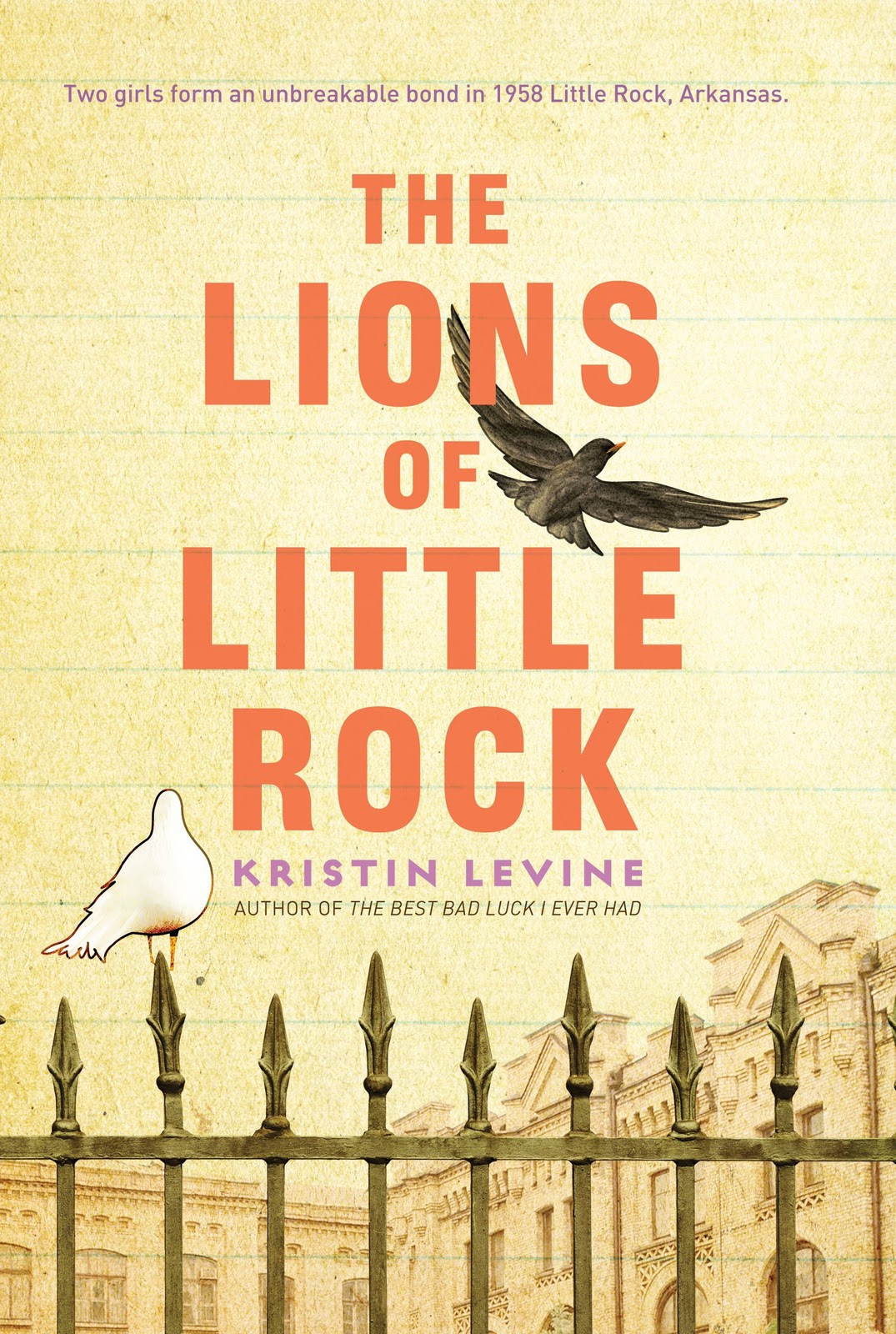 Without even further ado, let's talk about them. First up, Kristin Levine's The Lions of Little Rock. It was fine. I think the kids who dug Breathing Room will probably enjoy this - historical fiction, set in Little Rock during the school integration battle. My favorite thing about it was her decision to set it during the 1958/59 school year, a year after the Little Rock Nine, when all the high schools in Little Rock closed for the year instead of integrating. It's a part of the story that doesn't get told and it drives home just how strong the opposition to integration was. My least favorite thing was a fairly throwaway bit that left a lasting sour taste in my mouth: at one point the protagonist, Marlee, is giving a class presentation on a Native American tribe. Her friend had given her a feather as a talisman, to give her courage in the face of public speaking, and up to this point (and for the rest of the book), Marlee keeps the feather tucked in her pocket. But at this moment, she pulls it out and tucks it in one of her braids and talks about looking like an Indian girl and I just...ick. (I don't have the book here with me or I'd give you the direct quote.) It was one of those weird throwaway moments that shouldn't have been there.

- Buddy by M. H. Herlong
- Camo Girl by Kekla Magoon
- Counting by 7s by Holly Goldberg Sloan
- Fourmile by Watt Key
- The Fourth Stall by Chris Rylander
- The Lions of Little Rock by Kristin Levine
- One Came Home by Amy Timberlake
- One for the Murphys by Lynda Mullaly Hunt
- Perfect Game by Fred Bowen
- Rump: The True Story of Rumpelstiltskin by Leisl Shurtliff
- Summer of the Wolves by Polly Carlson-Voiles
- Zombie Baseball Beatdown by Paolo Bacigalupi
My initial thoughts:
- Lots of baseball
- I will need to learn how to pronounce some names (I'm looking at you, Bacigalupi)
- I am not particularly excited about any of these
I am now 3 books in (technically 4, because I read Counting by 7s a while ago, but I'll probably read it again - it goes fast). Much like last year, I have enjoyed them more than I expected to. I am not really going in any particular order; mostly, I have 6 in my apartment and 6 that I need to process before I can take them. The 6 I have are mixed into a pile of books to read this summer and I've kind of been pulling them out willy-nilly.
 Without even further ado, let's talk about them. First up, Kristin Levine's The Lions of Little Rock. It was fine. I think the kids who dug Breathing Room will probably enjoy this - historical fiction, set in Little Rock during the school integration battle. My favorite thing about it was her decision to set it during the 1958/59 school year, a year after the Little Rock Nine, when all the high schools in Little Rock closed for the year instead of integrating. It's a part of the story that doesn't get told and it drives home just how strong the opposition to integration was. My least favorite thing was a fairly throwaway bit that left a lasting sour taste in my mouth: at one point the protagonist, Marlee, is giving a class presentation on a Native American tribe. Her friend had given her a feather as a talisman, to give her courage in the face of public speaking, and up to this point (and for the rest of the book), Marlee keeps the feather tucked in her pocket. But at this moment, she pulls it out and tucks it in one of her braids and talks about looking like an Indian girl and I just...ick. (I don't have the book here with me or I'd give you the direct quote.) It was one of those weird throwaway moments that shouldn't have been there.
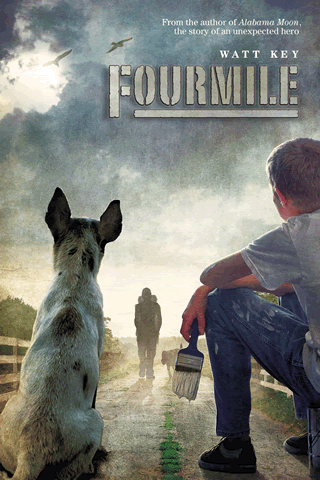
Next, Watt Key's Fourmile. If The Lions of Little Rock is this year's Breathing Room, I'm going to say that Fourmile is this year's Wild Life. A boy, a dog, a rural setting... While neither book appeals much to me, Fourmile is definitely a better book than Wild Life - I thought the southern setting was pretty well-drawn and there is some genuine tension. Dax is a truly scary character (mitigated solely by the fact that in my head, he looked exactly like Dax Shepard) and the ambiguity around Gary added some anxiety. There were real stakes, and I appreciated that. This also turned out to be yet another baseball book, a fact I mention because I keep thinking about ways to group these books and baseball would be one easy theme (Fourmile, The Perfect Game, and Zombie Baseball Beatdown). I didn't object to much, although I was annoyed that Foster's mom didn't step up at the end - that she had a gun in the house and didn't take it with her when she and her son were in such serious danger rang a little false to me.

Finally, Paolo Bacigalupi's Zombie Baseball Beatdown, my favorite of these first three books. This was fairly unexpected, given that I am not a fan of zombie stuff or baseball, but I certainly hadn't gone into it expecting to find a book that was hiding a treatise about the horrors of American meat production and immigration policy and racial discrimination. That sounds a little heavy-handed, but it isn't, I swear! It was fun thinking of the dozens of books that could be paired with this, from Eric Schlosser's Chew on This and Fast Food Nation to Francisco Jimenez's The Circuit to Darren Shan's Zom-B series (and more, I'm sure). It was funny and scary and occasionally a little too gross for me (so probably perfect for middle schoolers) and truly insightful. I hope kids read it for the humor and the gore and get tricked into asking questions about where their food comes and what it really means to be an American and I kind of can't wait to hear what they have to say about this book.
One more thing! In between those three books up there, I also read Andrew Smith's 100 Sideways Miles (the kind of YA book that makes me sad I don't work with slightly older kids), Nikki Loftin's Wish Girl (which is lovely and magical and namechecks Andy freaking Goldsworthy), and Claire Legrand's The Cavendish Home for Boys and Girls (creepy and crawly and really magnificent - it got raves from the kids who read it last year and those kids were right).
Monday, May 25, 2015
And then there are the books that you kind of want to keep to yourself.
There are, of course, any number of reasons for this - guilty pleasure, a deep connection you suspect no one else could understand, a feeling that you yourself don't quite understand what you've read (and a desire to keep that lack of understanding private), and so on. Or in this case...I don't really know.
I wrote a few years back about the responses that I get when I read classics. People make assumptions about the reasons for choosing big, fat books and they almost never assume that you're reading that thing because you want to. So if I have started reading the Bible (I have), perhaps I'd prefer to keep it to myself (and this blog that no one reads) to avoid trying to explain why.
Actually, I can try to explain. It's a few different reasons, really. I finished with Shakespeare, whose plays I was re-reading (chronologically, because that's how the book ordered them) and I really liked having that kind of big project and I missed it almost immediately. The Bible is one of those things I've always meant to read (and I've tried a couple of times) so it seemed like a good choice. Especially since it's broken down so nicely into books, allowing me to alternate really easily between Bible and other, shorter things. And it's a good palate-cleanser between those shorter things.
But also I'm kind of enjoying it! A lot of it is a slog, I won't lie, but there's some great stuff in there. I'm in Deuteronomy right now and it's just magnificent. I can see where Michelangelo got his mental image of Moses, because when I read his words, I see and hear them delivered by this guy:


Like I said, I've never made it all the way through before (I did get as far as Isaiah once), but this time I wrote it in pen in my reading log (and now I've talked about it here), so hopefully that'll keep me going. It definitely also helps to be breaking in between books. We'll see.
Subscribe to:
Posts (Atom)